
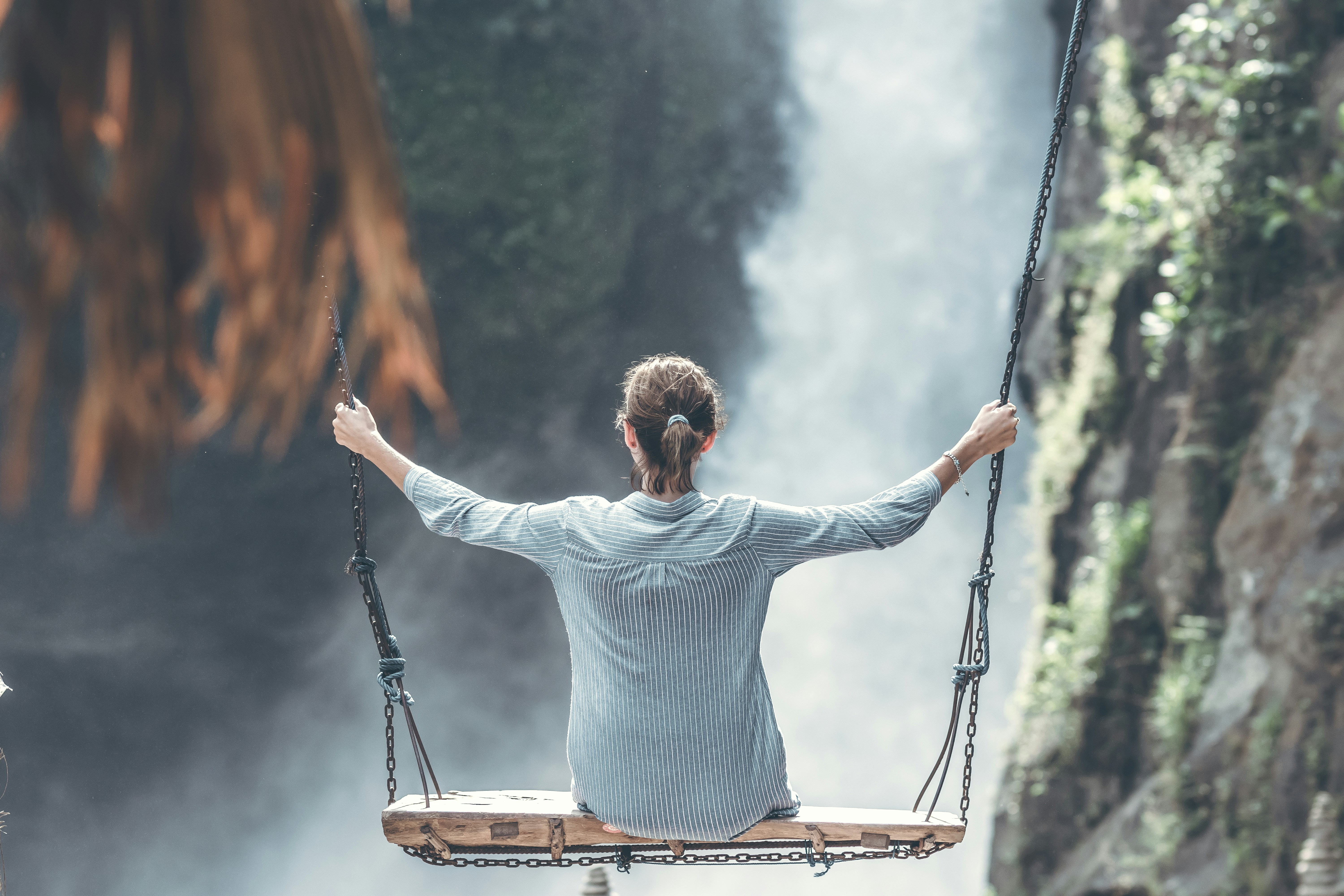

We seek out adventure for the thrill, the challenge, and the rush of adrenaline. But the most profound moments in any high-stakes activity—be it climbing, surfing, or trekking at high altitude—often aren’t the loudest. They’re the moments of intense, crystal-clear focus, where the noise of your own fear falls away and you’re left with just the present moment. This is the “flow state,” and mindfulness is the key that unlocks it.
Bridging the gap between thrill-seeking and mindfulness is one of the most powerful skills an adventurer can develop. It allows you to manage fear, improve performance, and deepen your connection with the incredible landscapes you’re moving through. Here are some practical, research-backed techniques to help you find that stillness within the motion.
1. The Three-Breath Reset: Your Mental Handbrake
When you’re in a high-stress situation, your sympathetic nervous system—the body’s “gas pedal”—kicks into overdrive, triggering a fight-or-flight response. The fastest way to regain control is with a simple, powerful breathing exercise.
- How to do it: In a tense moment, pause. Take a slow, deep inhale through your nose for four counts. Hold the breath for two counts. Then, execute a prolonged exhale through your mouth for six to eight counts. Repeat this cycle three times.
- Why it works: This technique is a form of physiological self-regulation. The prolonged exhale stimulates the vagus nerve, which activates your parasympathetic nervous system—the body’s “brake pedal.” This process lowers your heart rate and blood pressure, allowing you to shift from a reactive state of panic to one of calm, controlled focus. It’s an immediate tool for improving what psychologists call attentional control.
2. Somatic Anchoring: Grounding in the Physical
When your mind is racing with “what-ifs,” the most effective way to quiet it is to ground yourself in your immediate physical reality. This is more than just a casual observation; it’s a deliberate practice of interoceptive awareness, or sensing your body’s internal state.
- How to do it: Pause and bring your full attention to a single, neutral point of physical contact. Notice the solid pressure of your boots on the ground, the firm texture of the rock under your hand, or the feeling of your pack resting securely against your back. Hold your focus on that single, stable sensation for 10-15 seconds.
- Why it works: Fear and anxiety are future-oriented thoughts. By shifting your focus to a concrete, physical sensation in the present moment, you interrupt the brain’s spiraling narrative of “what might happen”. This technique, which can be called Somatic Anchoring, uses a physical anchor to pull your awareness out of your anxious mind and into the stability of your body, instantly making the situation feel more manageable.
3. Sensory Gating: Focusing the Spotlight
In an overwhelming environment, our brains can be flooded with too much information. Sensory Gating is the practice of intentionally narrowing your focus to filter out irrelevant data and concentrate only on what matters for the task at hand.
- How to do it: Deliberately choose one sensory stream to focus on. If you’re climbing, bring your full attention to the visual information: the specific cracks and holds in the rock in front of you. Tune out the distracting sounds of the wind or the dizzying sense of height. If you’re kayaking, focus on the auditory information: the rhythm of the water, the sound of your paddle entering the current.
- Why it works: This technique actively manages cognitive load. By consciously “gating” or filtering out non-essential sensory input, you free up mental bandwidth to improve decision-making and execute precise physical movements. It’s a key practice for achieving a flow state, where action and awareness merge seamlessly.
These techniques aren’t about eliminating the thrill. They are about managing the unproductive noise so you can be fully present for the experience. They transform a chaotic moment into an opportunity for deep presence, turning your adventures into a powerful tool for building resilience and self-awareness.
Our Adventure Traveler and Wellness Traveler Mindset Journals both include dedicated sections and prompts to help you practice these techniques and reflect on your experiences, making them a core part of your personal growth journey.
